Resocialization of Sound: Collaboration in Research, Archiving and Dissemination with Amazonian Collectives
NEWSLETTER
#3 Activity Report: April - October 2026
Dear colleagues and partners,
These past months, from April to October 2026, have taken the project back to the field and to the collections. In July, a field trip to Belém and Macapá brought us closer to our partners in Brazil. Over the summer, the first phase of our collaborative database came to an end, and the second is now underway. And in October, Wayana and Apalai knowledge holders spent ten days with the project team in the collections of the Museum of Ethnography (MEG) Geneva.
Fieldwork in Belém and Macapá (July)
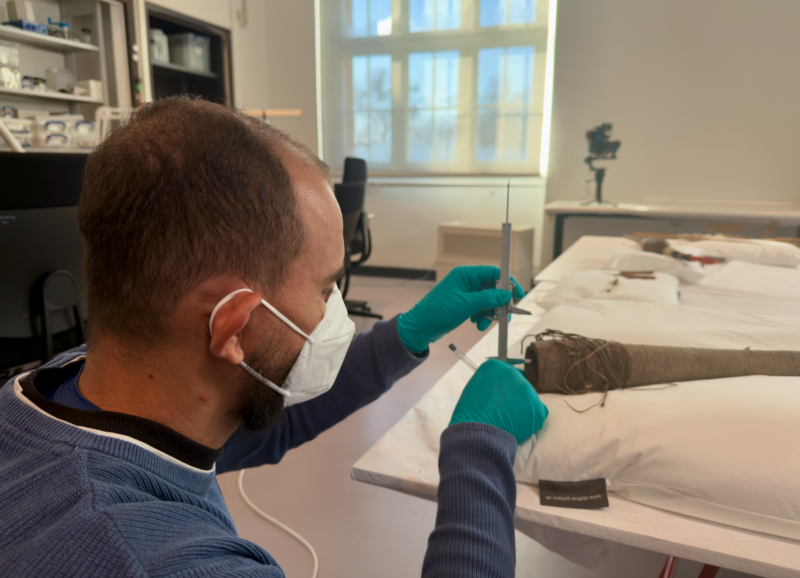
Bruno Britto’s July trip began in Belém, where he met our partner, Edilson Curuaia, from the LabEtno (UFPA). Some of you will remember Edilson’s visit to the Ethnological Museum Berlin last January, during one of our collection workshops. There he studied 15 Curuaia pieces in the museum’s technical reserve, among them a trumpet he intends to remake. That work is now taking shape: Edilson is in touch with an artisan in Altamira, who is expected to make a replica of the historical Curuaia trumpet in the second half of 2026.
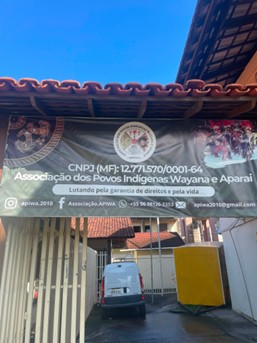
From Belém, Bruno went on to Macapá, where he met our collaborators Kutanan Wayana and Arinaware Apalai Waiana, director of APIWA. The trip also marked the start of our work with Irakiywa Apalai Waiana and Khauan Retuhpo Apalai Waiana, two Indigenous associate researchers who now translate project and MEG materials alongside Bruno.
The Project Database
Just before the summer break, ARKA completed the first phase of our collaborative database, built on the Tainacan platform. The database now holds the MEG Wayana-Apalai collections, from objects to sound recordings and photographs. Getting there took several steps:
- cleaning the MEG data;
- translating the metadata from French into Portuguese;
- importing the MEG content in both French and Portuguese;
- creating fields for collaborative work, so that community members can add their own annotations;
- developing a tool for assembling personal collections within the database;
- implementing a specialized vocabulary on material culture.
The second phase started with a kick-off meeting on 24 September, and the final delivery is due on 15 December. In this phase, ARKA will:
- connect the collections: extract information from the records that cuts across the collection boundaries, so that artifacts, sound recordings and photographs can be linked;
- refine the data: consolidate the vocabularies and add labels on rights, provenance and cultural protocols, following the FAIR and CARE principles;
- improve the Portuguese translation;
- make the interface easier to use: add language menus, a landing page, better search and a clearer contribution workflow;
- train the project team, so that the training can be repeated with our Wayana and Apalai partners.
In January 2027, the database will open to its first users: our Wayana and Apalai partners and the participants of the UniFAP course. This step will allow us to discuss the ethical protocols for sharing this collection within and beyond their communities.
Workshops at the MEG Geneva (5–14 October)
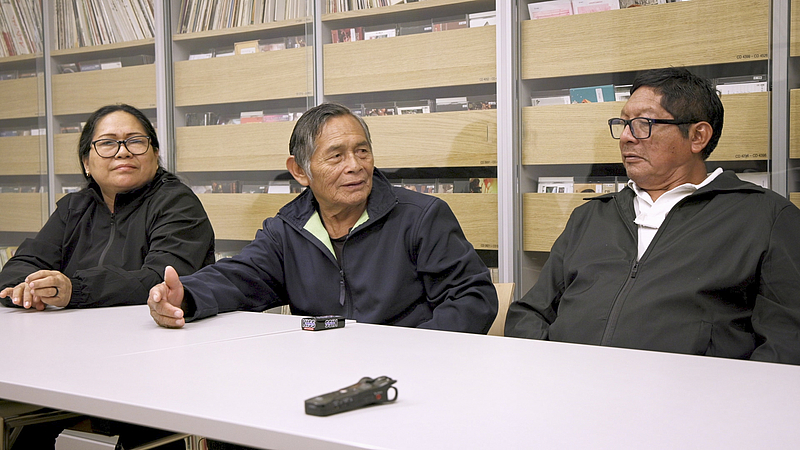
In the second week of October, a delegation of Wayana and Apalai knowledge holders came to work with us at the MEG Geneva: the flute and chant mestres Merekuku Apalay and Tadeu Wayanã Apalay, the story specialist Cecília Awaeko Apalai, together with Kutanan Waiapi Wayana as mediator, and Iori Linke as consultant on raw materials and material ecology. Matthias Lewy, Bruno Britto, Diana Zschuppe and I joined them from Weimar, while Madeleine Leclair, Ileana Muñoz-Rodriguez, Aurélie Doutre (intern), Lucie Monot, Nelly Pontier and other MEG colleagues followed the activities.
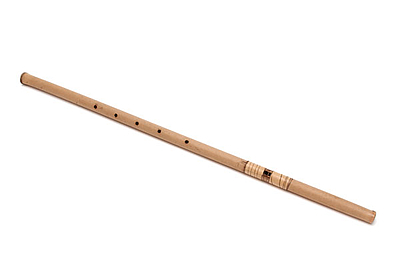
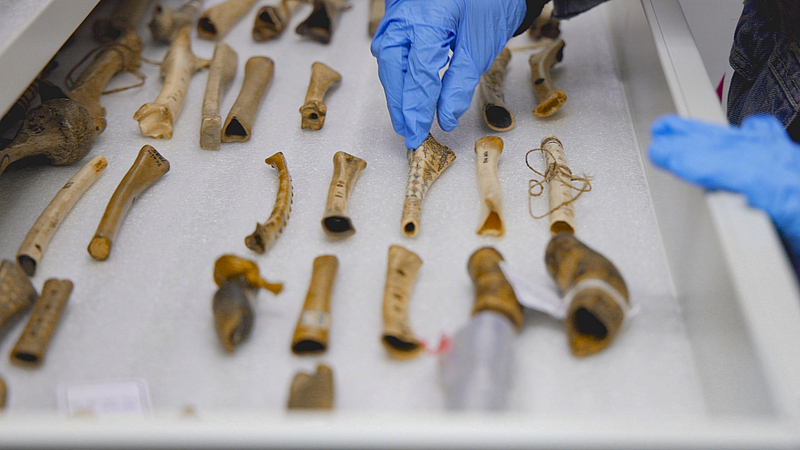
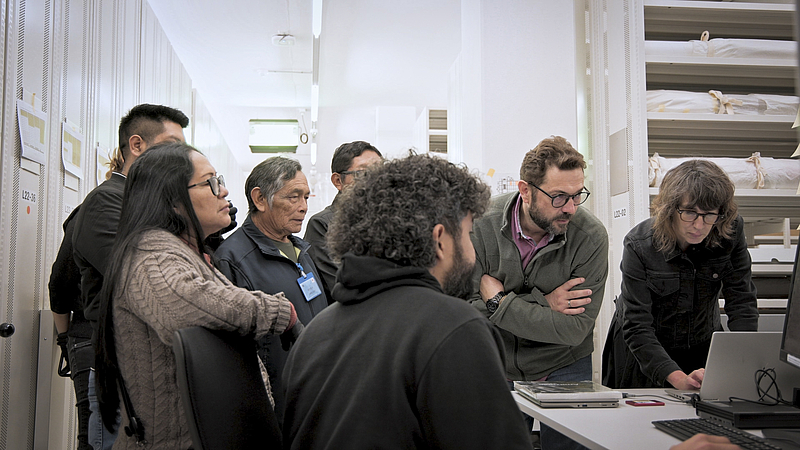
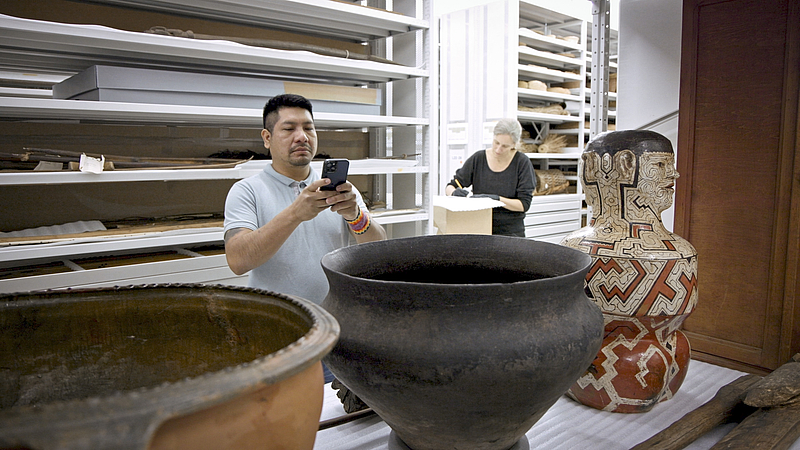
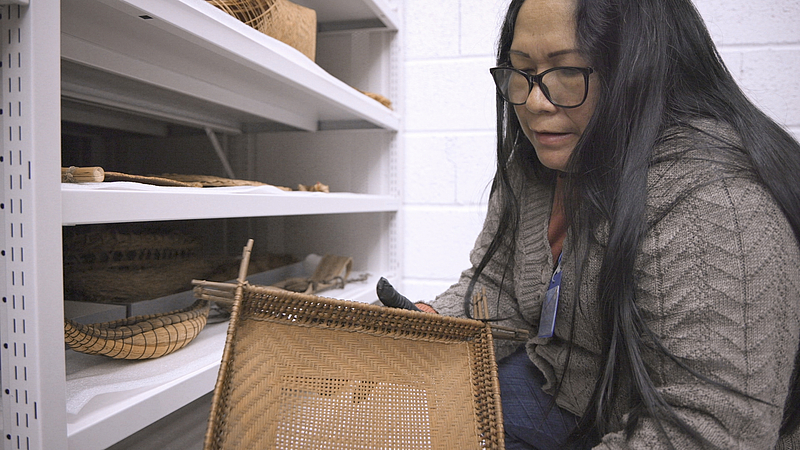
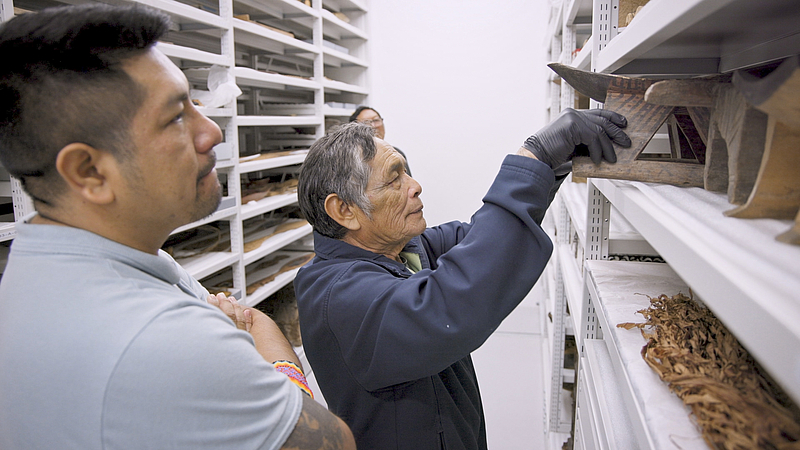
We started on 7 and 8 October in the musical instrument storage areas, working mostly with flutes (mëlaïme, louwéïme and kuli-kuli watkë, among others). As Merekuku, Tadeu and Cecília took the instruments in their hands, memories came back to them, each artifact leading to a traditional story, a rite and events of the past. The group also talked about restoring one of these instruments, the meraïme-amohawi (inv. 034381, see picture below), in a future session.
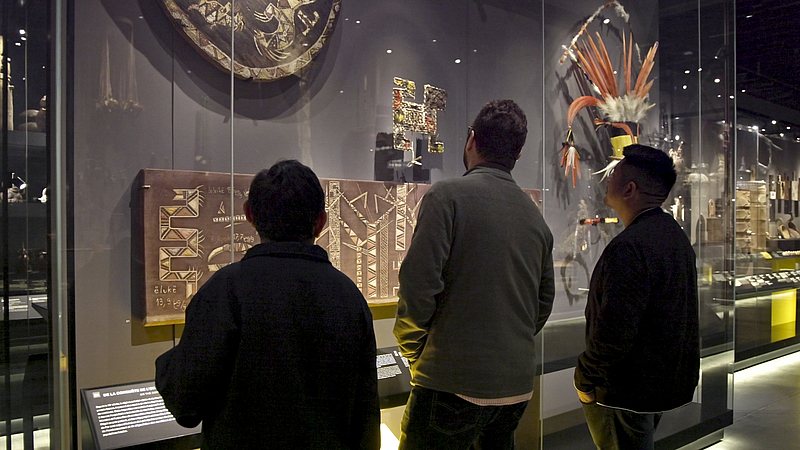
On 9 October, after a tour of the museum’s temporary and permanent galleries, we sat down to listen to the Schoepf recordings, and the listening continued the next morning. The stories told in the storage areas guided what the group chose to listen to: the History of the Lost Man and the Kalau-Karau performances held in the MEG sound archives. The History of the Lost Man is the foundational origin story of the Wayana and Apalai peoples. In it, a man journeys for a long time through the unknown and meets various powerful beings, from whom he receives the ritual knowledge that the Wayana and Apalai hold today. What struck us most is that, throughout his journey, he acquired this knowledge not by watching but by listening. What he heard inspired him to make the instruments the Wayana and Apalai still play in their main rites today.
On 10 October, we all visited the future exhibition space to get to know the venue and plan the next steps toward this key project goal. Two days later, on 12 October, we continued this discussion with the museum’s director, Carine A. Durand, and kicked off the exhibition project. The meeting mainly helped us agree on a calendar and discuss the project’s governance, which will include focal points from all the institutions involved, as well as a board. The opening is now planned for the end of November 2029. Work starts now on the exhibition concept, which is due by the end of 2027. The Resocialization of Sound team will be mainly responsible for the field material (photos, videos), concepts and texts, to be produced and processed by mid-2028.
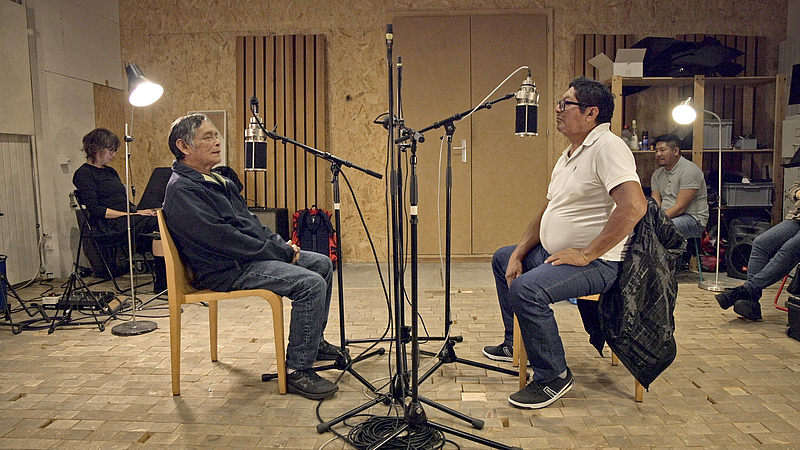
On 13 October, our last day, we spent the morning in the storage areas of the Americas collections and the afternoon in Renaud Millet-Lacombe’s recording studio. Renaud kindly lent us his knowledge and expertise as Merekuku and Tadeu recorded an addendum to the History of the Lost Man, a more detailed account of how the Lost Man gained today’s musical knowledge and instruments from primordial animals and other powerful beings. They also recorded three bone flute songs and a section of the Kalau-Karau ritual chants. Below are a few more pictures from the week we spent together in Geneva!
Main project goals completed since our last report
- Bruno Britto's field trip to Belém and Macapá (July);
- Onboarding of our two correspondents and translators in Macapá, Irakiywa Apalai Waiana and Khauan Retuhpo Apalai Waiana;
- First phase of the project database completed; second phase started (24 September);
- Workshop with Wayana and Apalai knowledge holders at the MEG Geneva (5–14 October), including collection and archive sections and new recordings;
- Kick-off of the 2029 exhibition: calendar agreed and governance structure discussed among APIWA, the MEG and the project.
Upcoming priorities
- APIWA annual meeting (early November): presentation of the project updates to APIWA members;
- Project database: final delivery of the second phase on 15 December; access for registered users from January 2027;
- UniFAP course (January–March 2027): in-person sessions on Saturdays in Macapá — heritage concepts and UNESCO and IPHAN guidelines (January), database research (February), field documentation (March);
- Fieldwork: Bruno Britto's stay in Bona village and Macapá to study the MEG archive alongside Wayana and Apalai masters (2027);
- Iori Linke's consultancy on raw materials and material ecology connected to Wayana and Apalai musical knowledge (February–August 2027);
- Workshop with knowledge holders in Indigenous territory: now planned for August 2027.
Thank you to all our partners for these months of work together. We look forward to telling you what comes next.
Resocialization of Sound is funded by the Swiss National Science Foundation (Grant #220198) and led by Hochschule für Musik Franz Liszt Weimar in collaboration with MEG Geneva.
I am Thiago da Costa Oliveira, the project coordinator.

#2 Activity Report: February – March 2026
Dear colleagues and partners,
This second activity report covers February and March 2026, a period marked by active research, new archival discoveries, and some important adjustments to our project timeline.
Research in Progress
Bruno Britto — MEG Geneva Collection
Bruno Britto continues his work on the MEG Geneva Wayana collection, developing an ethnographically grounded reorganization based on the existing bibliography on the Wayana and Aparai peoples. Starting from the museum’s catalog structure — with its system of reference numbers, recordings, and descriptive units — he is building an alternative organizational framework that connects archival materials to musical, ritual, and instrumental contexts documented in the ethnographic literature.
Every step in this reorganization involves interpretive decisions, and Bruno is carefully documenting his criteria and reasoning. This methodological work will be central to his master’s thesis, for which a first structural outline is expected by April 2026.
Thiago da Costa Oliveira — Museu Nacional Kuikuro Video Archive Over the past weeks, I have been working intensively with approximately ten hours of archival video footage from the early phase of the Video nas Aldeias project, which documented a Kuikuro ritual some twenty years ago. In collaboration with Indigenous specialists who are translating and commenting on the material in Portuguese, I am examining the relationship between the process of mask-making, the music of the Kuikuro sacred flutes, and the broader dynamics of collective ritual action. What emerges from this material is a striking picture of the entanglement between sound, body, object, and social organization: the mask is not an isolated artifact, but the focal point of a synesthetic and collective process in which music structures action at every stage. This analysis is being developed toward a co-authored article with Carlos Fausto, professor of the National Museum of Rio de Janeiro and specialist in the Kuikuro people, with a first draft targeted for June 2026.
Matthias Lewy and Natasha Gordon — Pemón Collection
Prof. Matthias Lewy is currently working with Natasha Gordon to systematically organize his personal research archives on the Pemón people, encompassing videotapes, audio tapes, photographs, fieldnotes, and other media accumulated over years of fieldwork. This foundational organizational work feeds directly into the development of the Pemón database subproject, which will eventually form part of our project database.
Video Release: Edilson Curuaia’s Visit to Berlin
As promised in our previous newsletter, we are pleased to share the video documentation of Edilson Curuaia’s January 2026 visit to the Ethnological Museum Berlin.
UNIFAP Course Update and Evolving Calendar
The in-person phase of Module I of the course “Training in Cultural Heritage and Collaborative Research with the Wayana and Aparai Peoples,” developed in partnership with the Federal University of Amapá (UniFAP) and APIWA under a UNESCO framework, has been rescheduled. Originally planned for July 2026, the in-person phase will now take place from January to March 2027, following a decision taken by the PARFOR Equidade students themselves. The calendar remains subject to changes, so this is an evolving matter.
The workshop with Wayana-Aparai knowledge holders in Indigenous territory was also discussed in our March 10 meeting with APIWA representatives Arinaware Aparai and Kutanan Wayana, and with Iepé representatives (Pedro Bezerra Ribas and Sofia Galvão). It is now planned for April 2027, following the in-person course phases.
Focus for 2026: Research, Database, and Geneva Visit With the course now scheduled for 2027, the project’s main activities for 2026 are organized around three interlocking priorities:
• Ongoing archival research, as described in the previous section, is running in parallel with Bruno Britto’s fieldwork trip, provisionally planned for July 2026. This visit will focus on collaborative work on the database and the translation and contextualization of archival materials together with locally appointed focal points.
• Database development: completion of the project database in Portuguese by mid-2026, integrating the MEG Schöpf Collection materials — more than 5,000 photographs, sound recordings, approximately 300 artefacts from the 1970s, and Rauschert/TMS materials. The project team is working toward appointing two local collaborators in Macapá, Wayana-Aparaia, nominated by APIWA.
• Visit to MEG Geneva (October 2026): a group of 5–6 Wayana-Aparai specialists in music, instruments, and traditional rituals is scheduled to visit the MEG Geneva collections in October 2026. The visit will be an important moment of direct engagement between the community knowledge holders and the historical archival materials.
Exhibition Planning — “The Life of Sound Archives”
This period, Madeleine Leclair and I completed a first draft of a preliminary exhibition concept note for a proposed 2028 MEG exhibition — a required step in the museum’s internal approval process. The note presents the exhibition’s core concept: the social life of sound archives from a Wayana-Aparai perspective, and what it means for a European ethnographic museum to take that perspective seriously in its archival and curatorial practices. Planned formats include multisensory installations, listening stations, immersive sound diffusion, an archive library, and contemporary artistic interventions in dialogue with the historical collections. If approved, the exhibition is set to open at MEG Geneva in June 2028.
Main project goals completed during the last two months • Database contract and implementation • Memorandum of Understanding between the Chair of Transcultural Music Studies at the Department of Musicology, Franz Liszt University of Music Weimar, and the Federal University of Amapá, Indigenous Intercultural Bachelor's Degree Course – PARFOR Equity, coordinated by Prof. Dr. Agerdânio Andrade de Souza.
• Delivery of the Rauscher/Pinto tapes for digitization.
• First draft of the preliminary exhibition concept note for the proposed MEG exhibition, co-developed with Madeleine Leclair.
Upcoming priorities
• Appoint and onboard Macapá-based local collaborators (target: May–June 2026) • Receive APIWA nominations for Geneva visit specialists and focal points (deadline: beginning of April) • Bruno Britto: thesis structure — first outline by April 2026 • First version of the project database, including an approved data scheme, the import of the entire MEG collection, and fields for translation of data from French to Portuguese (for May 2026).
• First draft of Kuikuro ritual article (Thiago da Costa Oliveira and Carlos Fausto) — target: June 2026 • Prepare logistics for MEG Geneva visit (for October 2026)
Resocialization of Sound is funded by the Swiss National Science Foundation (Grant #220198) and led by Hochschule für Musik Franz Liszt Weimar in collaboration with MEG Geneva.
I am Thiago da Costa Oliveira, the project coordinator.
We look forward to sharing further updates soon!
#1 Activity Report: September 2025 - January 2026
Dear colleagues and partners,
This newsletter represents our first attempt to establish a regular communication channel with all project stakeholders. Going forward, we will send these updates monthly to keep you informed about the project's development, key decisions, and upcoming activities as we work together toward the resocialization of archival materials with Amazonian Indigenous communities.
Strategic Refocus
Following extensive consultations with our partners, we have decided to concentrate the project's efforts on exemplary, in-depth work with the Wayana-Aparai peoples. This strategic focus allows us to develop comprehensive methodologies and collaborative protocols that can serve as models for similar work. This refocus does not prevent us from working strategically with other project partners and from continuing to digitize the HfM Weimar Kayapo/Xikrin collection. We continue our collaboration with Curuaia researchers, as detailed below, and have activated a new Pemón subproject, with Natasha Gordon contracted as a specialist to work on the Pemón collection held at HfM Weimar.
MEG Geneva Collection and Database Development
In December, I visited the MEG Geneva (December 15-17) for meetings with the curatorial team, including consultation on the planned 2028 exhibition "Life of Archives." These discussions reinforced the strategic decision to focus our work on the Wayana-Aparai component, as the exhibition will center on demonstrating the life cycle of archival materials from its collection/creation to concrete examples of resocialization that allow us to discover new sonic worlds.
In January, thanks to the efforts of Madeleine Leclair and Grégoire de Ceuninck, MEG completed the transfer of the Schöpf Collection data: 663 Wayana objects, 26 sound recordings, and 5,088 photographs. This material is now being prepared for integration into Tainacan, the Brazilian-developed database platform we will use for collaborative archival access. We received a new proposal for Tainacan development on January 30, with implementation planned for March through May 2026. The platform will eventually host collections from MEG and HfM Weimar (Wayana-Aparai, Xikrin, and Pemón materials).
Curuaia Collection Consultation
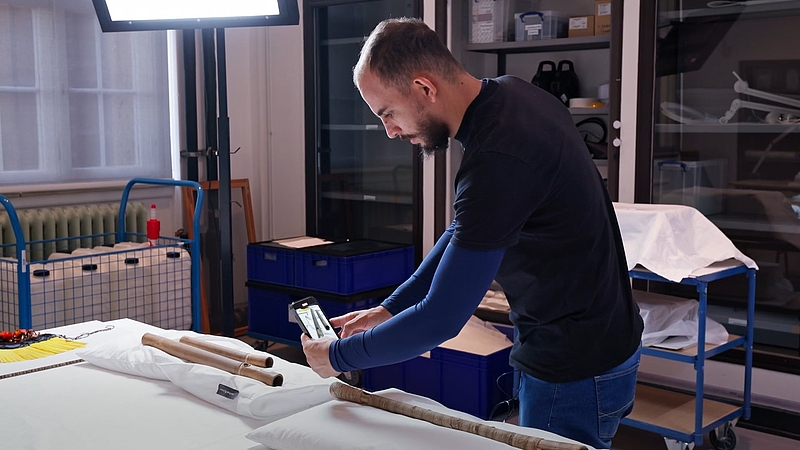
In January (20-26), Edilson Curuaia visited Berlin to consult the Curuaia materials held at the American collection of the Ethnological Museum, curated by Stephanie Schien. The visit benefited from Diana Zschuppe's administrative support and Bruno Britto's careful accompaniment throughout Edilson’s trip.
During his visit to the museum's technical reserve, Edilson studied 15 pieces, including a trumpet that will inform his re-elaboration of traditional Curuaia musical instruments.
Edilson also visited the Ibero American Institute to locate a specialized bibliography on the Curuaia people and was welcomed by its director, Barbara Göbel. He then participated in a workshop at HfM Weimar on January 24, where he presented his research findings and cultural experience, and we began planning the next stages of this work. A detailed visit report from Bruno Britto is expected by the end of this month, along with my editing of the video documentation.
UniFAP Course Development
We have been developing the structure for "Training in Cultural Heritage and Collaborative Research with the Wayana and Aparai Peoples" in partnership with the Federal University of Amapá. The partnership with UniFAP and APIWA aims to establish institutional channels for the resocialization of collections and archives. The course will consist of two modules running from April 2026 through June 2027. Each module includes 20 hours of in-person instruction followed by 20 hours of activities in Indigenous villages.
Working with APIWA (Aparai-Wayana Indigenous Peoples Association) and UniFAP, we have identified eight cultural specialists in Wayana-Aparai music for participation. The course will involve two language monitors, one technical monitor, one APIWA administrator, and three UniFAP professors.
On January 28, we met with IEPÉ (the NGO that advises APIWA) to discuss concerns about the course structure, particularly regarding payment models and the logistics of the village-based component. A meeting with all actors is scheduled for February 4 to address these questions and finalize the course design. The MoU for the course is currently being revised internally at HfM Weimar.
Additional Collections Work
We are also moving forward on the digitization of the Rauschert/Oliveira Pinto Collection held at HfM Weimar. A meeting with the Thuringian State Music Archive is scheduled for February 10 to discuss in-house options and next steps.
Upcoming Priorities
In February, our immediate priorities include finalizing the UniFAP course structure with all partners, contracting the Tainacan developer, beginning work on Module I content elaboration with Prof. Tiago de Oliveira Pinto, and continuing the digitization discussions. We will also organize the Nextcloud folder structure and update the MEG project website. The project team has established bi-weekly coordination meetings and updated both the HfM Weimar and SNSF websites. We will continue to work closely with our partners at APIWA, IEPÉ, UniFAP, MEG Geneva, and the Ethnological Museum Berlin as the project moves forward.
Resocialization of Sound is funded by the Swiss National Science Foundation (Grant #220198) and led by Hochschule für Musik Franz Liszt Weimar in collaboration with MEG Geneva. I am Thiago da Costa Oliveira, the project coordinator.