
From Viennese Classical to Modern
Welcome Concert for the General Assembly of the German Rectors' Conference
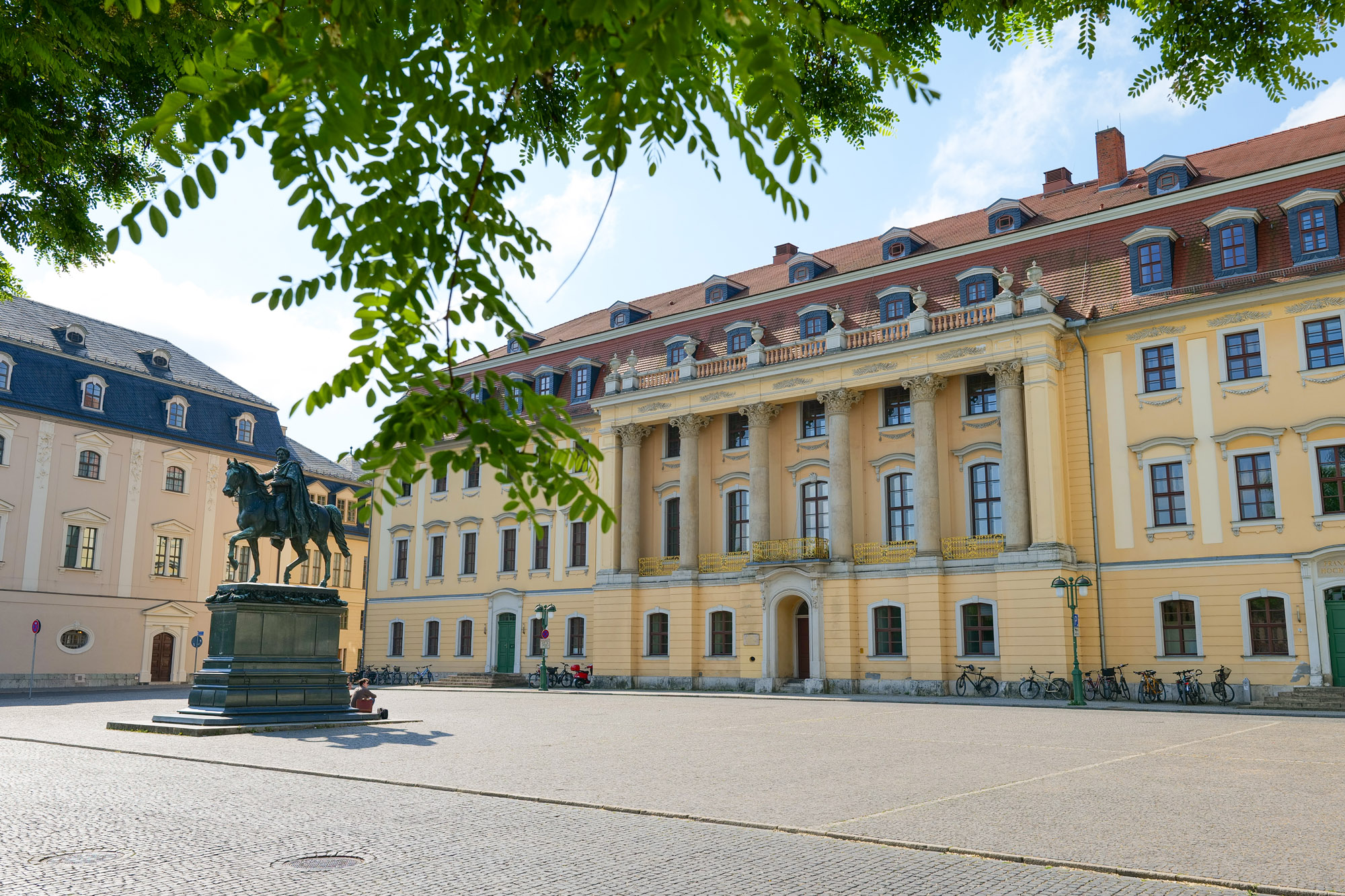
A diverse concert program invites the audience on an exciting journey through different musical eras. To offer a melodious welcome to the members and guests of the German Rectors’ Conference (HRK), which is holding its annual and general assembly in Weimar on Monday and Tuesday, students from the University of Music Franz Liszt Weimar will present a public chamber music evening on Sunday, April 26 at 6:00 p.m. in the Festsaal Fürstenhaus. Admission is free.
From the Viennese Classical period to the modern era, a program unfolds full of contrasts and musical expressiveness. The concert opens with the first movement of Franz Schubert’s Piano Trio No. 1 in B-flat major, which captivates with its lyrical warmth and melodic richness. This is followed by Franz Liszt’s “Rhapsodie espagnole,” a brilliant piano piece full of temperament and virtuosity, before the first movement of Felix Mendelssohn Bartholdy’s String Quartet No. 3 in D major brings fresh energy and youthful lightness to the stage.
Opera lovers will then get their money’s worth with Gaetano Donizetti’s duet “Quanto Amore” from “L’elisir d’amore.” In this charming and humorous scene, the characters Adina and Dulcamara meet. The audience can look forward to an entertaining mix of lightness, wit, and soulful melody. Finally, György Ligeti’s “Six Bagatelles” for wind quintet provide an exciting contrast. These short, concise pieces are characterized by rhythmic sophistication, a joy of sonic experimentation, and surprising twists.
This concert is intended to provide a musical prelude to the Annual Meeting and 42nd General Assembly of the HRK, which will take place on April 27 and 28 at the Weimar Music University and the Bauhaus-Universität Weimar.
The Conference of University Presidents (HRK) is the voluntary association of state and state-recognized universities in Germany. The 272 member universities, at which approximately 90 percent of all students in Germany are enrolled, are represented in the HRK by their executive boards and rectors’ offices. The HRK serves as the voice of universities in dealings with policymakers and the public and is the central forum for the formation of consensus and decision-making within the higher education system. The HRK addresses all issues concerning the role and responsibilities of universities in academia and society.
[22 April 2026]