
Pain and Love
University Orchestra delves into the worlds of Romanticism and Modernism
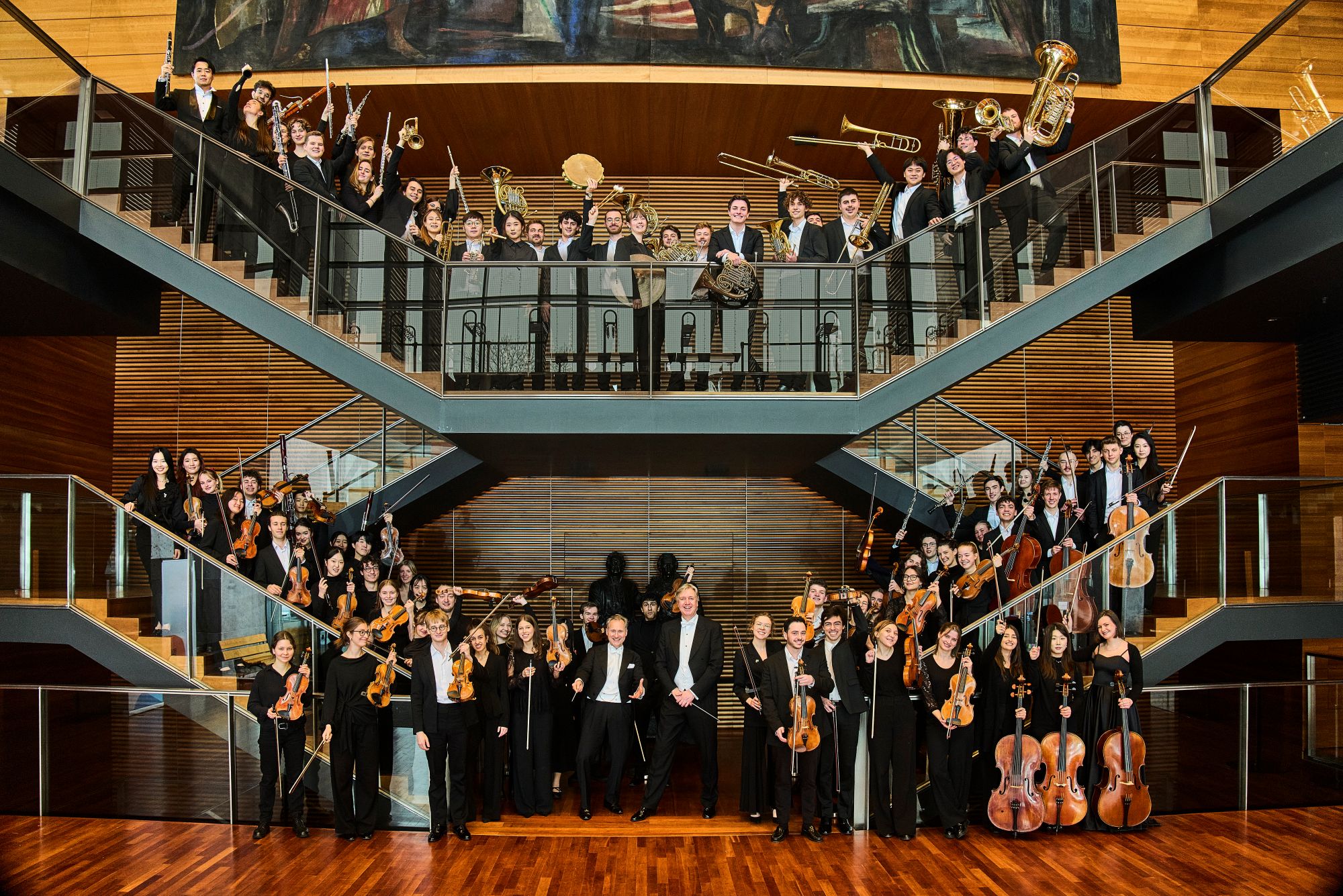
With a large ensemble, the FRANZ LISZT University of Music Weimar invites you to a symphony concert that was originally scheduled for April 23: The new date for this opulent symphonic program spanning Romanticism and Modernism, featuring the University Orchestra under the direction of Prof. Ekhart Wycik, is now Thursday, May 7 at 7:30 p.m. in the Weimarhalle.
Tickets cost 20 euros (15 euros with a discount) and are available at the Weimar Tourist Information Office as well as at the box office. Upon presentation of the thoska, students can purchase tickets for 5 euros and staff members for 10 euros at the Weimar Tourist Information Office.
The program includes, among other works, excerpts from Richard Wagner’s opera “Tristan und Isolde”—Wagner’s own arrangement of the prelude and final scene (Isolde’s Liebestod) as an instrumental orchestral piece. The composer worked on this music drama for about three years, focusing primarily on musically conveying the characters’ intense emotions: deep longing, inescapable love, and ultimately the death of a loved one.
In sonic contrast to Wagner’s harmonically bold music with its famous “Tristan chord” comes Johannes Brahms’ Symphony No. 2 in D Major, Op. 73. Inspired by the landscape of Lake Wörth, Brahms created a work that simply bubbles over with nature-inspired, cheerful, and pastoral melodies. Especially in comparison to the tragic and somber First Symphony, the composer succeeds in bringing the natural idyll of Carinthia to life.
The symphonic evening is rounded off by Olivier Messiaen’s “Les Offrandes oubliées”. The subtitle “Méditation symphonique” describes the work’s essence as a profound religious contemplation. Messiaen imbued his compositional color palette—in keeping with the metaphor of the tripartite altarpiece—with deep expression. A connection between this work and Richard Wagner’s “Tristan und Isolde” is evident through two leitmotifs: pain and love. The pain of Tristan and Isolde, who cannot live without each other and choose a shared death of love as a last resort, is contrasted with the pain of the “sweet Jesus,” who takes upon himself the sins of all humanity.
[9 April 2026]