
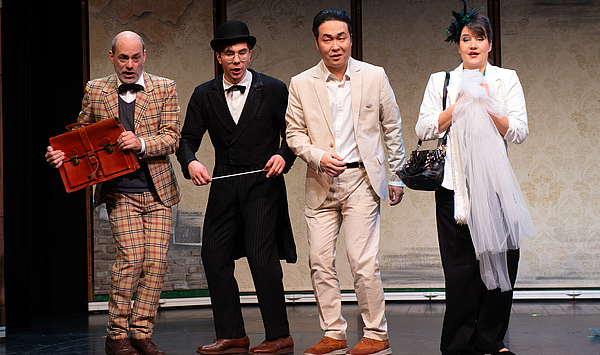
Confusion with great emotions
Mozart's opera "Le nozze di Figaro" is staged in Saalfeld and Weimar
Wolfgang Amadeus Mozart's popular comic opera "Le nozze di Figaro" ("Figaro's Wedding") will celebrate its premiere in Saalfeld: Andrea Raabe will direct this collaboration between the Rudolstadt Theatre and the University of Music FRANZ LISZT Weimar on Saturday, 10 February at 7:30 p.m. at the Meininger Hof in Saalfeld. The performance will be conducted by General Music Director Oliver Weder at the podium of the Thüringer Symphoniker.
The stage and costumes are designed by set designer Ronald Winter. Students from the Department of Singing | Music Theatre at the Weimar University of Music will be singing. Subsequent performances will take place on 11 and 20 February at 15:00 and on 23 and 24 February at 19:30 in the Meininger Hof in Saalfeld.
Tickets are available at the advance booking offices of Rudolstadt Theatre and via the website www.theater-rudolstadt.de.
This opera production will then have its premiere in Weimar on 26 April at 6:30 p.m. in the Belvedere Studio Theatre. This second performance cycle will be performed by the Orchestra of the University of Music FRANZ LISZT Weimar under the direction of Prof Ekhart Wycik. Mozart's "opera buffa" in four acts will also be performed here in Italian.
Further performances will follow on 28 April at 16:00, on 3 May at 18:30 and on 5 May at 16:00 in the Studiotheater Belvedere.
Tickets for the studio theatre will soon be available in advance from the Weimar Tourist Information Office for 15 euros, concessions 10 euros.
"Le nozze di Figaro" thrives on the joy of deception and intrigue, games of hide-and-seek and rebellion against the social order, but also on great emotions. The action takes place in Seville shortly before the French Revolution. Count Almaviva has long since grown weary of his love for his wife. Instead, he has recently taken a fancy to her young maid Susanna.
Even on the day of her wedding to Figaro, he does not refrain from his advances and claims the "right of the first night" for himself. Susanna, however, is anything but enthusiastic about the count and his plans and, together with the deceived countess, hatches a plan to deceive the lustful nobleman.
Librettist Lorenzo da Ponte retains the complex confusion of Beaumarchais' frivolous and highly political original "The Fancy Day or Figaro's Wedding" and yet creates space for special aria moments and lively ensemble scenes. Mozart endows the characters with a multi-layered emotional world that unfolds before the audience in his colourful music. Musical humour and depth of heart go hand in hand in this opera.
[7 February 2024]